Is Rib Remodeling Safe? What the Evidence Shows About Risk and Recovery
An evidence-based look at the WASP Technique™, patient selection, safety protocols and what recovery really involves.

It is the question every serious patient and every careful surgeon asks before anything else: is reshaping the ribcage actually safe, and what does recovery really involve? It deserves an honest, evidence based answer not marketing.
Here is what the published data shows about the WASP Technique™, why patient selection matters more than most discussions admit, and how to tell a responsible program from a risky one.
Why “Safe” Depends Entirely on the Technique
There is no single answer to “is waist surgery safe,” because waist surgery is not one procedure. The safety profile of removing bone is fundamentally different from the safety profile of reshaping it through a millimeter-wide puncture.
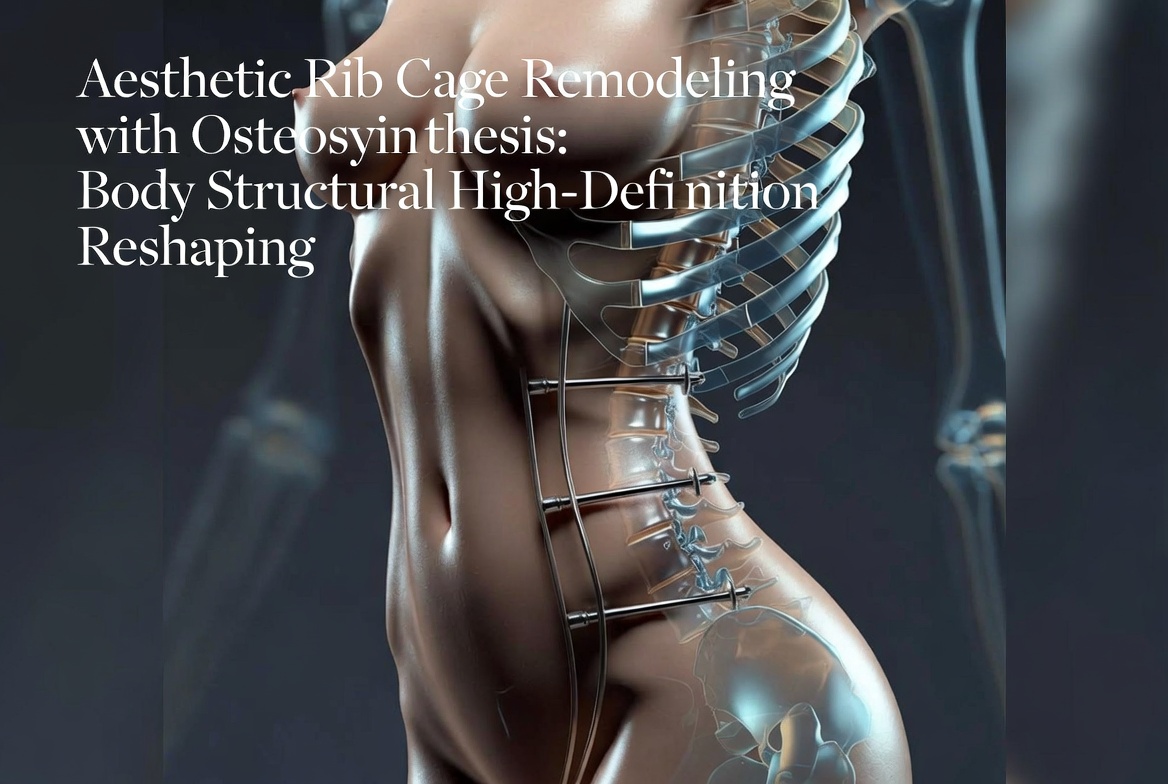
The older approach full resection of the floating ribs is an aggressive, invasive procedure. The modern approach, the WASP Technique™ (Waistline Aesthetic Slimming by Puncture) developed by Dr. Alfredo Hoyos, was designed specifically to achieve the result with far less trauma: a 2 mm needle puncture and an ultrasonic device, piezotome, to create a controlled, partial fracture, with no bone removed.
So the honest version of the question is not “is waist surgery safe” but “which technique, performed by whom, on which patient.” Those three variables decide everything.
What the Published Evidence Actually Shows
This is where the WASP Technique™ separates itself from procedures that exist only in before-and-after photos. Its outcomes were studied in a retrospective cohort across specialized institutions in Colombia and Brazil and published in a peer reviewed journal, Aesthetic Surgery Journal Open Forum.
In that published series, the technique delivered meaningful, measurable waist reduction while maintaining a low complication rate, with no serious adverse events reported. That distinction matters enormously. A documented safety profile is accountable to data and scrutiny; a marketing claim is accountable to no one.
You can review the scientific evidence behind WASP here. When you evaluate any provider, the first question is simple: can they point you to published evidence, or only to testimonials?
A documented technique is accountable to evidence. A marketed trend is accountable only to attention.
Patient Selection: The Part Most Discussions Skip
The single most underrated factor in surgical safety is who is not operated on. A responsible technique has clear exclusion criteria and the published WASP cohort did.
Candidacy in that study excluded patients with prior rib surgeries, a high body mass index, chronic respiratory disease, and spinal disorders. This is not a limitation; it is the opposite. It is evidence of a disciplined, anatomically guided protocol that screens out higher risk patients rather than operating on everyone who can pay.
If a provider is willing to perform this on any candidate without rigorous screening, that is a warning sign regardless of how impressive the marketing looks.
What Recovery Is Really Like
Because the WASP Technique™ is minimally invasive and removes no bone, it is designed for a far less demanding recovery than the open resection it replaced. The skeletal frame is preserved and repositioned, not cut away.
That said, this is real surgery on real anatomy, and recovery is individual. Specific timelines, activity restrictions, and post-operative protocols depend on the patient and critically on the surgeon’s training.
This is precisely why the source of a surgeon’s training matters: a complete recovery protocol is part of the technique, not an afterthought. A surgeon trained directly by the creators of the technique inherits the full protocol; one who reverse engineered it from social media does not.
For how the technique compares to the alternatives, see our full comparison of rib remodeling techniques.
How to Evaluate the Safety of Any Rib Remodeling Program
Three questions cut through the noise for patients choosing a surgeon, and for surgeons choosing where to train:
- Is there published evidence? Peer reviewed outcomes mean the safety profile is documented, not asserted.
- Are there real exclusion criteria? A technique that screens patients is a technique that takes safety seriously.
- Is the surgeon trained at the source? Proximity to the origin of a technique means proximity to its complete safety and recovery protocol.
The Bottom Line
The safest version of waist contouring is not the most dramatic marketing it is the one with published evidence, disciplined patient selection, and a complete protocol taught at the source. The WASP Technique™ was built on exactly that foundation: minimally invasive, peer reviewed, and developed by Dr. Alfredo Hoyos.
Safety is a protocol, and a protocol is learned not improvised. The WASP Technique™ is taught directly by its creator at the B Waist™ program in Bogotá an invitation only, elite level training for board-certified plastic surgeons.
Train in the WASP Technique™ at B Waist™
Learn structural waist contouring from the source through the B Waist™ program in Bogotá.
Discover B Waist™Medical disclaimer: This article is for educational purposes and does not constitute medical advice. Surgical outcomes and recovery vary by patient and surgeon, and no procedure is without risk. Consult a board certified plastic surgeon to determine whether any procedure is appropriate for you.