B WAIST · WASP TECHNIQUE™ · WAIST CONTOURING
The search for a refined waistline is not new. For centuries, the waist has been associated with elegance, femininity, proportion, and body harmony. Across different eras, cultures, and aesthetic movements, people have explored many ways to create the appearance of a narrower waist and a more defined silhouette.
From external compression garments to surgical interventions, the history of waist transformation reflects the evolution of beauty ideals, medical knowledge, technology, and patient safety.
Historically, corsets were one of the earliest and most recognizable methods used to modify the appearance of the waist. They created an immediate visual effect by externally compressing the torso and enhancing the contrast between the waist and hips.
Although corsets became a symbol of fashion and femininity, they were not a surgical solution. Their effect was temporary, dependent on external pressure, and limited by comfort, mobility, and long-term practicality.
Over time, modern waist trainers emerged as a contemporary version of this same concept. They became popular in fitness and lifestyle culture, promising waist shaping through compression. However, like corsets, waist trainers do not structurally remodel the anatomy. Their impact is mainly temporary and external.
The arrival of liposuction transformed aesthetic surgery. For the first time, surgeons could directly remove localized fat deposits and reshape specific areas of the body.
Traditional liposuction changed the way waist contouring was approached by allowing volume reduction around the abdomen, flanks, and back. This helped improve body proportions, but its focus remained primarily on fat removal.
As aesthetic surgery evolved, it became clear that the waist is not defined by fat alone. Bone structure, rib projection, muscular definition, skin quality, and anatomical transitions all influence the final silhouette.
This realization opened the door to a more advanced concept: body contouring as structural design.
In the past, some patients seeking dramatic waist reduction explored rib removal procedures. These surgeries aimed to reduce the lower rib cage width by surgically removing portions of the ribs.
Although rib removal could create visible changes in waist shape, it represented a more aggressive surgical approach with greater anatomical disruption. Over time, the evolution of modern aesthetic surgery began to move away from aggressive resection and toward techniques focused on preservation, control, and refinement.
This shift became essential. The future of waist surgery would no longer be based on removing anatomy, but on understanding, respecting, and remodeling it.
Modern waist surgery is entering a new era. Instead of relying only on compression, fat removal, or rib resection, the new generation of techniques focuses on minimally invasive structural refinement.
The WASP TECHNIQUE™ — Waistline Aesthetic Slimming by Puncture — developed by Dr. Alfredo Hoyos, MD, represents this evolution.
This approach is designed to refine the waist through controlled, minimally invasive rib remodeling concepts, using puncture-based access, small incisions, specialized instruments, and advanced anatomical planning. Rather than removing ribs, the goal is to modify the projection and behavior of the lower ribs in a controlled way while preserving anatomical integrity.
The major difference between traditional methods and the WASP TECHNIQUE™ lies in philosophy.
Corsets and waist trainers compress.
Traditional liposuction removes fat.
Rib removal eliminates anatomy.
WASP TECHNIQUE™ focuses on controlled structural refinement.
This represents a new mindset in body contouring: the waist is not treated as a flat area to reduce, but as a three-dimensional structure to design.
Today, patients are looking for results that appear natural, athletic, elegant, and proportionally balanced. They are not only seeking smaller measurements; they are seeking harmony, shape, and definition.
The evolution from corsets to WASP TECHNIQUE™ reflects the broader evolution of aesthetic surgery itself: from external illusion to anatomical precision, from aggressive alteration to minimally invasive innovation, and from simple reduction to structural body design.
The future of waist surgery is not about doing more. It is about doing it smarter, safer, and with deeper anatomical understanding.
INFORMATIVE CONTENT. THIS DOES NOT REPLACE AN INDIVIDUAL MEDICAL EVALUATION. ALWAYS FOLLOW THE RECOMMENDATIONS OF YOUR SPECIALIST.
B WAIST · WASP TECHNIQUE™ · SCIENTIFIC EVIDENCE
The evolution of modern waist contouring is increasingly supported by anatomical research, clinical experience, surgical innovation, and peer-reviewed scientific publications.
Over the past several years, Dr. Alfredo Hoyos together with an international collaborative team of surgeons and researchers have contributed to the scientific development of modern rib remodeling and structural waist contouring techniques.
This scientific evolution includes multiple published articles exploring minimally invasive rib remodeling, osteosynthesis stabilization, and structural body reshaping concepts designed to improve waist definition while preserving anatomical integrity and procedural safety.
Together, these publications show the progression of rib remodeling from isolated aesthetic concepts into a developing scientific field supported by anatomical study, surgical standardization, and clinical investigation.
Published in Aesthetic Surgery Journal Open Forum, this article introduces the WASP TECHNIQUE™ — Waistline Aesthetic Slimming by Puncture — as a minimally invasive approach to waist refinement and rib remodeling.
The publication describes controlled puncture-based and parallel remodeling techniques designed to improve waist contour and waist-to-hip proportion while minimizing tissue disruption.
The study reflects years of anatomical research, surgical observation, and technical refinement focused on developing safer and more reproducible approaches for structural waist contouring.
PMCID: PMC12378439
PMID: 40874070
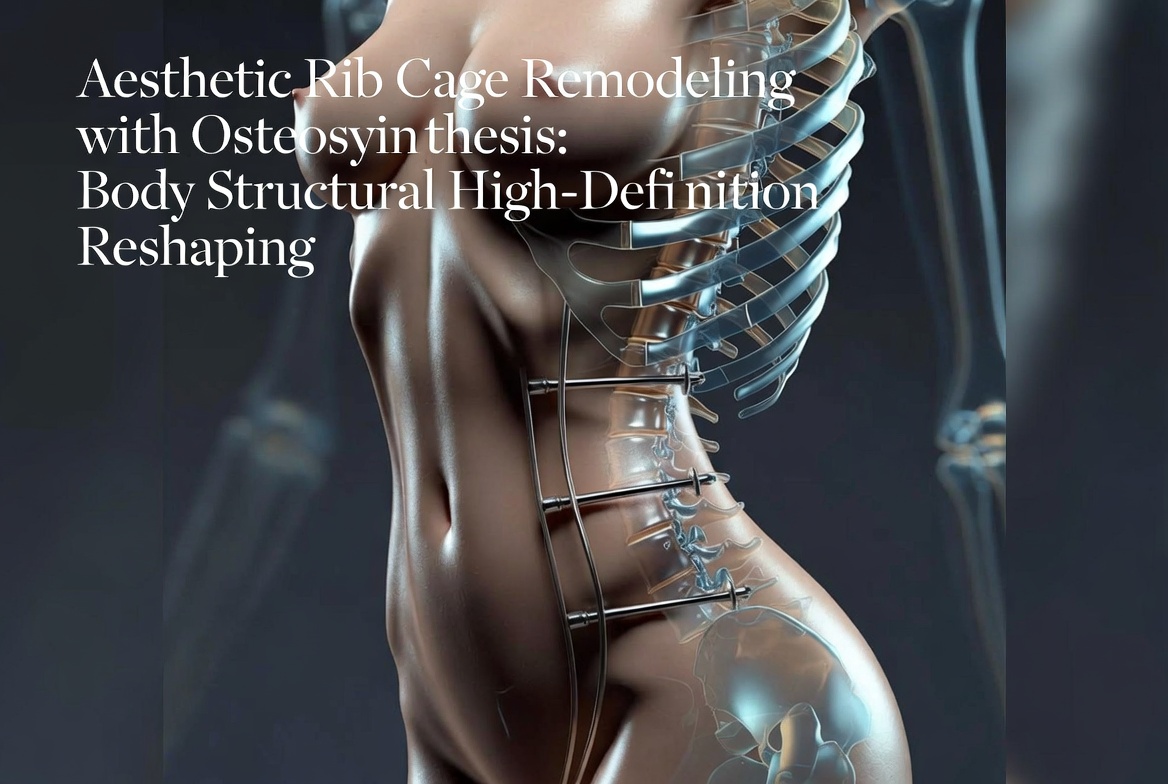
This publication further expanded the scientific understanding of rib remodeling through osteotomy and osteosynthesis stabilization techniques designed for high-definition structural reshaping of the torso.
The article explores the concept of modifying thoracic structure through controlled rib remodeling while maintaining stability and anatomical support, representing an important advancement in structural body contouring.
PMCID: PMC11741130
PMID: 38710099
This earlier publication contributed foundational concepts regarding rib cage remodeling with stabilization techniques and helped establish the scientific basis for future developments in modern waist contouring procedures.
The article explored anatomical biomechanics, thoracic reshaping concepts, and stabilization approaches that later contributed to the evolution of advanced rib remodeling methodologies.
Its multidisciplinary author collaboration reflects the growing scientific and surgical interest in the field of structural body contouring and waist architecture.
Together, these publications demonstrate the progression of rib remodeling from isolated aesthetic concepts into a developing scientific field supported by anatomical study, surgical standardization, and clinical investigation.
The WASP TECHNIQUE™ reflects this evolution: where anatomy, innovation, evidence, and artistic body design converge to shape the future of modern waist contouring.
INFORMATIVE CONTENT. THIS DOES NOT REPLACE AN INDIVIDUAL MEDICAL EVALUATION. ALWAYS FOLLOW THE RECOMMENDATIONS OF YOUR SPECIALIST.
B WAIST · BODY PROPORTION · HOURGLASS FIGURE
Throughout history, the hourglass figure has remained one of the most recognized and admired body shapes across cultures, fashion, art, and aesthetics. While beauty standards continue to evolve, one concept has remained remarkably consistent: the visual importance of waist proportion.
Modern aesthetic science increasingly shows that body perception is not based only on body size or weight, but on proportion, balance, and anatomical transitions. Among these elements, the waist-to-hip ratio has become one of the most influential factors in how the human body is visually interpreted.
The relationship between the waist and hips plays a powerful role in the perception of femininity, harmony, athleticism, and overall body attractiveness. In neuroaesthetics — the study of how the brain interprets beauty and visual stimuli — the waist acts as a central visual anchor that influences the perception of body symmetry and silhouette.
A narrower and more defined waist creates stronger contrast between the torso and hips, enhancing the natural curves of the body while contributing to a more balanced and elegant appearance. This is one of the reasons why waist refinement has become a major focus in modern body contouring.
In aesthetic perception, proportion often matters more than size. The waist is one of the key elements that defines how the entire silhouette is read by the human eye.
In today’s aesthetic world, patients are no longer searching only for volume reduction. They seek shape, definition, proportion, and structural harmony. The modern beauty ideal has shifted toward bodies that appear:
Social media, fitness culture, fashion, and wellness trends have also contributed to this transformation. The rise of athletic femininity — combining strength with elegance — has elevated the importance of abdominal definition, waist contouring, and body architecture.
This evolution has pushed aesthetic surgery beyond traditional fat removal and into a new era focused on anatomical design and structural contouring.
Techniques such as the WASP TECHNIQUE™, developed by Dr. Alfredo Hoyos, reflect this modern understanding of body aesthetics by focusing on waist refinement, proportion, and harmonious transitions rather than simply reducing measurements.
Modern body contouring is no longer only about subtraction. It is about design, flow, proportion, and respecting the unique anatomy of each patient to create results that appear refined, elegant, and naturally balanced.
Ultimately, the science of the hourglass figure is not about exaggeration or artificial appearance. It is about understanding how anatomy, perception, proportion, and movement work together to create a silhouette that feels naturally balanced to the human eye.
In modern body contouring, proportion changes everything.
INFORMATIVE CONTENT. THIS DOES NOT REPLACE AN INDIVIDUAL MEDICAL EVALUATION. ALWAYS FOLLOW THE RECOMMENDATIONS OF YOUR SPECIALIST.
B WAIST · WASP TECHNIQUE™ · BODY CONTOURING
For decades, body contouring procedures focused primarily on fat removal. Traditional liposuction transformed aesthetic surgery by improving body proportions, but modern patients are now seeking something far more sophisticated than simple volume reduction.
Today, the waist has become one of the most important aesthetic focal points in body contouring, representing femininity, harmony, athleticism, and structural balance.
This global evolution in aesthetic surgery has led to the development of more advanced approaches focused not only on removing fat, but on sculpting the architecture of the body itself.
The WASP TECHNIQUE™ emerges as part of this new generation of body contouring innovation.
Developed by Dr. Alfredo Hoyos after years of research, anatomical study, surgical experience, and scientific evaluation, the WASP TECHNIQUE™ was designed with one fundamental objective: to explore safer and more refined ways to achieve waist enhancement and structural definition.
Inspired by the natural geometry of the “wasp waist,” the technique combines advanced body contouring concepts, minimally invasive technology, anatomical precision, and modern aesthetic philosophy to create a more harmonious transition between the torso, waist, and hips.
Unlike traditional concepts focused exclusively on fat reduction, the WASP philosophy approaches the waist as an architectural structure. The procedure is designed to improve proportion, contour, and visual balance while respecting the individuality and anatomy of each patient.
The development of the WASP TECHNIQUE™ has involved years of investigation into anatomy, biomechanics, surgical safety, tissue behavior, and minimally invasive rib remodeling concepts.
Through continuous clinical observation and scientific analysis, Dr. Hoyos has focused on developing techniques and specialized instruments aimed at improving precision, control, and patient safety throughout the procedure.
This evolution reflects a larger transformation occurring in modern body contouring. Patients no longer seek only smaller measurements — they seek natural definition, athletic femininity, elegant silhouettes, and results that look balanced rather than artificial.
As aesthetic medicine advances into a new era of precision and anatomical customization, the waist has become the centerpiece of modern body design.
The WASP TECHNIQUE™ represents this evolution: where anatomy, innovation, science, and artistry converge to redefine the future of waist contouring.
INFORMATIVE CONTENT. THIS DOES NOT REPLACE AN INDIVIDUAL MEDICAL EVALUATION. ALWAYS FOLLOW THE RECOMMENDATIONS OF YOUR SPECIALIST.